olymmath

HMMT 2015

Harvard-MIT Mathematics Tournament 2015.

Algebra

A1

  • Algebra
  • Answer

Let QQ be a polynomial

Q(x)=a0+a1x+⋯+anxnQ(x)=a_{0}+a_{1} x+\cdots+a_{n} x^{n}

where a0,…,ana_{0}, \ldots, a_{n} are nonnegative integers. Given that Q(1)=4Q(1)=4 and Q(5)=152Q(5)=152, find Q(6)Q(6).

Answer, solutions and source

A2

  • Algebra
  • Answer

The fraction 12015\frac{1}{2015} has a unique "(restricted) partial fraction decomposition" of the form

12015=a5+b13+c31\frac{1}{2015}=\frac{a}{5}+\frac{b}{13}+\frac{c}{31}

where a,b,ca, b, c are integers with 0≤a<50 \leq a<5 and 0≤b<130 \leq b<13. Find a+ba+b.

Answer, solutions and source

A3

  • Algebra
  • Answer

Let pp be a real number and c≠0c \neq 0 an integer such that

c−0.1<xp(1−(1+x)101+(1+x)10)<c+0.1c-0.1<x^{p}\left(\frac{1-(1+x)^{10}}{1+(1+x)^{10}}\right)<c+0.1

for all (positive) real numbers xx with 0<x<10−1000<x<10^{-100}. (The exact value 10−10010^{-100} is not important. You could replace it with any "sufficiently small number".) Find the ordered pair (p,c)(p, c).

Answer, solutions and source

A4

  • Algebra
  • Answer

Compute the number of sequences of integers (a1,…,a200)\left(a_{1}, \ldots, a_{200}\right) such that the following conditions hold.

  • 0≤a1<a2<⋯<a200≤2020 \leq a_{1}<a_{2}<\cdots<a_{200} \leq 202.
  • There exists a positive integer NN with the following property: for every index i∈{1,…,200}i \in\{1, \ldots, 200\} there exists an index j∈{1,…,200}j \in\{1, \ldots, 200\} such that ai+aj−Na_{i}+a_{j}-N is divisible by 203.

Answer, solutions and source

A5

  • Algebra
  • Answer

Let a,b,ca, b, c be positive real numbers such that a+b+c=10a+b+c=10 and ab+bc+ca=25a b+b c+c a=25. Let m=min⁡{ab,bc,ca}m=\min \{a b, b c, c a\}. Find the largest possible value of mm.

Answer, solutions and source

A6

  • Algebra
  • Answer

Let a,b,c,d,ea, b, c, d, e be nonnegative integers such that 625a+250b+100c+40d+16e=153625 a+250 b+100 c+40 d+16 e=15^{3}. What is the maximum possible value of a+b+c+d+ea+b+c+d+e ?

Answer, solutions and source

A7

  • Algebra
  • Answer

Suppose (a1,a2,a3,a4)\left(a_{1}, a_{2}, a_{3}, a_{4}\right) is a 4 -term sequence of real numbers satisfying the following two conditions:

  • a3=a2+a1a_{3}=a_{2}+a_{1} and a4=a3+a2a_{4}=a_{3}+a_{2};
  • there exist real numbers a,b,ca, b, c such that

an2+bn+c=cos⁡(an)a n^{2}+b n+c=\cos \left(a_{n}\right)

for all n∈{1,2,3,4}n \in\{1,2,3,4\}. Compute the maximum possible value of

cos⁡(a1)−cos⁡(a4)\cos \left(a_{1}\right)-\cos \left(a_{4}\right)

over all such sequences (a1,a2,a3,a4)\left(a_{1}, a_{2}, a_{3}, a_{4}\right).

Answer, solutions and source

A8

  • Algebra
  • Answer

Find the number of ordered pairs of integers (a,b)∈{1,2,…,35}2(a, b) \in\{1,2, \ldots, 35\}^{2} (not necessarily distinct) such that ax+ba x+b is a "quadratic residue modulo x2+1x^{2}+1 and 35 ", i.e. there exists a polynomial f(x)f(x) with integer coefficients such that either of the following equivalent conditions holds:

  • there exist polynomials P,QP, Q with integer coefficients such that f(x)2−(ax+b)=(x2+1)P(x)+f(x)^{2}-(a x+b)=\left(x^{2}+1\right) P(x)+ 35Q(x)35 Q(x);
  • or more conceptually, the remainder when (the polynomial) f(x)2−(ax+b)f(x)^{2}-(a x+b) is divided by (the polynomial) x2+1x^{2}+1 is a polynomial with (integer) coefficients all divisible by 35 .

Answer, solutions and source

A9

  • Algebra
  • Answer

Let N=302015N=30^{2015}. Find the number of ordered 4-tuples of integers (A,B,C,D)∈{1,2,…,N}4(A, B, C, D) \in\{1,2, \ldots, N\}^{4} (not necessarily distinct) such that for every integer n,An3+Bn2+2Cn+Dn, A n^{3}+B n^{2}+2 C n+D is divisible by NN.

Answer, solutions and source

A10

  • Algebra

Find all ordered 4 -tuples of integers (a,b,c,d)(a, b, c, d) (not necessarily distinct) satisfying the following system of equations: \begin{aligned} a^{2}-b^{2}-c^{2}-d^{2} & =c-b-2 \ 2 a b & =a-d-32 \ 2 a c & =28-a-d \ 2 a d & =b+c+31 \end{aligned}

Answer, solutions and source

Geometry

G1

  • Geometry
  • Answer

Let RR be the rectangle in the Cartesian plane with vertices at (0,0),(2,0),(2,1)(0,0),(2,0),(2,1), and (0,1)(0,1). RR can be divided into two unit squares, as shown.
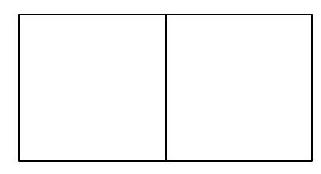
Pro selects a point PP uniformly at random in the interior of RR. Find the probability that the line through PP with slope 12\frac{1}{2} will pass through both unit squares.

Answer, solutions and source

G2

  • Geometry
  • Answer

Let ABCA B C be a triangle with orthocenter HH; suppose that AB=13,BC=14,CA=15A B=13, B C=14, C A=15. Let GAG_{A} be the centroid of triangle HBCH B C, and define GB,GCG_{B}, G_{C} similarly. Determine the area of triangle GAGBGCG_{A} G_{B} G_{C}.

Answer, solutions and source

G3

  • Geometry
  • Answer

Let ABCDA B C D be a quadrilateral with ∠BAD=∠ABC=90∘\angle B A D=\angle A B C=90^{\circ}, and suppose AB=BC=1,AD=2A B=B C=1, A D=2. The circumcircle of ABCA B C meets AD‾\overline{A D} and BD‾\overline{B D} at points EE and FF, respectively. If lines AFA F and CDC D meet at KK, compute EKE K.

Answer, solutions and source

G4

  • Geometry
  • Answer

Let ABCDA B C D be a cyclic quadrilateral with AB=3,BC=2,CD=2,DA=4A B=3, B C=2, C D=2, D A=4. Let lines perpendicular to BC‾\overline{B C} from BB and CC meet AD‾\overline{A D} at B′B^{\prime} and C′C^{\prime}, respectively. Let lines perpendicular to AD‾\overline{A D} from AA and DD meet BC‾\overline{B C} at A′A^{\prime} and D′D^{\prime}, respectively. Compute the ratio [BCC′B′][DAA′D′]\frac{\left[B C C^{\prime} B^{\prime}\right]}{\left[D A A^{\prime} D^{\prime}\right]}, where [ϖ][\varpi] denotes the area of figure ϖ\varpi.

Answer, solutions and source

G5

  • Geometry
  • Answer

Let II be the set of points (x,y)(x, y) in the Cartesian plane such that

x>(y49+2015)1/4x>\left(\frac{y^{4}}{9}+2015\right)^{1 / 4}

Let f(r)f(r) denote the area of the intersection of II and the disk x2+y2≤r2x^{2}+y^{2} \leq r^{2} of radius r>0r>0 centered at the origin (0,0)(0,0). Determine the minimum possible real number LL such that f(r)<Lr2f(r)<L r^{2} for all r>0r>0.

Answer, solutions and source

G6

  • Geometry
  • Answer

In triangle ABC,AB=2,AC=1+5A B C, A B=2, A C=1+\sqrt{5}, and ∠CAB=54∘\angle C A B=54^{\circ}. Suppose DD lies on the extension of ACA C through CC such that CD=5−1C D=\sqrt{5}-1. If MM is the midpoint of BDB D, determine the measure of ∠ACM\angle A C M, in degrees.

Answer, solutions and source

G7

  • Geometry
  • Answer

Let ABCDEA B C D E be a square pyramid of height 12\frac{1}{2} with square base ABCDA B C D of side length AB=12A B=12 (so EE is the vertex of the pyramid, and the foot of the altitude from EE to ABCDA B C D is the center of square ABCDA B C D ). The faces ADEA D E and CDEC D E meet at an acute angle of measure α\alpha (so that 0∘<α<90∘0^{\circ}<\alpha<90^{\circ} ). Find tan⁡α\tan \alpha.

Answer, solutions and source

G8

  • Geometry
  • Answer

Let SS be the set of discs DD contained completely in the set {(x,y):y<0}\{(x, y): y<0\} (the region below the xx-axis) and centered (at some point) on the curve y=x2−34y=x^{2}-\frac{3}{4}. What is the area of the union of the elements of SS ?

Answer, solutions and source

G9

  • Geometry
  • Answer

Let ABCDA B C D be a regular tetrahedron with side length 1 . Let XX be the point in triangle BCDB C D such that [XBC]=2[XBD]=4[XCD][X B C]=2[X B D]=4[X C D], where [ϖ][\varpi] denotes the area of figure ϖ\varpi. Let YY lie on segment AXA X such that 2AY=YX2 A Y=Y X. Let MM be the midpoint of BDB D. Let ZZ be a point on segment AMA M such that the lines YZY Z and BCB C intersect at some point. Find AZZM\frac{A Z}{Z M}.

Answer, solutions and source

G10

  • Geometry
  • Answer

Let G\mathcal{G} be the set of all points (x,y)(x, y) in the Cartesian plane such that 0≤y≤80 \leq y \leq 8 and

(x−3)2+31=(y−4)2+8y(8−y)(x-3)^{2}+31=(y-4)^{2}+8 \sqrt{y(8-y)}

There exists a unique line ℓ\ell of negative slope tangent to G\mathcal{G} and passing through the point (0,4)(0,4). Suppose ℓ\ell is tangent to G\mathcal{G} at a unique point PP. Find the coordinates (α,β)(\alpha, \beta) of PP.

Answer, solutions and source

Combinatorics

C1

  • Combinatorics
  • Answer

Evan's analog clock displays the time 12:1312: 13; the number of seconds is not shown. After 10 seconds elapse, it is still 12:13. What is the expected number of seconds until 12:14?

Answer, solutions and source

C2

  • Combinatorics
  • Answer

Victor has a drawer with 6 socks of 3 different types: 2 complex socks, 2 synthetic socks, and 2 trigonometric socks. He repeatedly draws 2 socks at a time from the drawer at random, and stops if the socks are of the same type. However, Victor is "synthetic-complex type-blind", so he also stops if he sees a synthetic and a complex sock.

What is the probability that Victor stops with 2 socks of the same type? Assume Victor returns both socks to the drawer after each step.

Answer, solutions and source

C3

  • Combinatorics
  • Answer

Starting with the number 0, Casey performs an infinite sequence of moves as follows: he chooses a number from {1,2}\{1,2\} at random (each with probability 12\frac{1}{2} ) and adds it to the current number. Let pmp_{m} be the probability that Casey ever reaches the number mm. Find p20−p15p_{20}-p_{15}.

Answer, solutions and source

C4

  • Combinatorics
  • Answer

Alice Czarina is bored and is playing a game with a pile of rocks. The pile initially contains 2015 rocks. At each round, if the pile has NN rocks, she removes kk of them, where 1≤k≤N1 \leq k \leq N, with each possible kk having equal probability. Alice Czarina continues until there are no more rocks in the pile. Let pp be the probability that the number of rocks left in the pile after each round is a multiple of 5 . If pp is of the form 5a⋅31b⋅cd5^{a} \cdot 31^{b} \cdot \frac{c}{d}, where a,ba, b are integers and c,dc, d are positive integers relatively prime to 5⋅315 \cdot 31, find a+ba+b.

Answer, solutions and source

C5

  • Combinatorics

For positive integers xx, let g(x)g(x) be the number of blocks of consecutive 1 's in the binary expansion of xx. For example, g(19)=2g(19)=2 because 19=10011219=10011_{2} has a block of one 1 at the beginning and a block of two 1 's at the end, and g(7)=1g(7)=1 because 7=11127=111_{2} only has a single block of three 1 's. Compute g(1)+g(2)+g(3)+⋯+g(256)g(1)+g(2)+g(3)+\cdots+g(256).

Answer, solutions and source

C6

  • Combinatorics
  • Answer

Count the number of functions f:Z→{f: \mathbb{Z} \rightarrow\{ 'green', 'blue' }\} such that f(x)=f(x+22)f(x)=f(x+22) for all integers xx and there does not exist an integer yy with f(y)=f(y+2)=f(y)=f(y+2)= 'green'.

Answer, solutions and source

C7

  • Combinatorics

2015 people sit down at a restaurant. Each person orders a soup with probability 12\frac{1}{2}. Independently, each person orders a salad with probability 12\frac{1}{2}. What is the probability that the number of people who ordered a soup is exactly one more than the number of people who ordered a salad?

Answer, solutions and source

C8

  • Combinatorics
  • Answer

Let SS be the set of all 3 -digit numbers with all digits in the set {1,2,3,4,5,6,7}\{1,2,3,4,5,6,7\} (so in particular, all three digits are nonzero). For how many elements abc‾\overline{a b c} of SS is it true that at least one of the (not necessarily distinct) "digit cycles"

abc‾,bca‾,cab‾\overline{a b c}, \overline{b c a}, \overline{c a b}

is divisible by 7 ? (Here, abc‾\overline{a b c} denotes the number whose base 10 digits are a,ba, b, and cc in that order.)

Answer, solutions and source

C9

  • Combinatorics
  • Answer

Calvin has a bag containing 50 red balls, 50 blue balls, and 30 yellow balls. Given that after pulling out 65 balls at random (without replacement), he has pulled out 5 more red balls than blue balls, what is the probability that the next ball he pulls out is red?

Answer, solutions and source

C10

  • Combinatorics

A group of friends, numbered 1,2,3,…,161,2,3, \ldots, 16, take turns picking random numbers. Person 1 picks a number uniformly (at random) in [0, 1], then person 2 picks a number uniformly (at random) in [0, 2], and so on, with person kk picking a number uniformly (at random) in [0,k][0, k]. What is the probability that the 16 numbers picked are strictly increasing?

Answer, solutions and source

Team

T1

  • Team
  • Answer

The complex numbers x,y,zx, y, z satisfy

xyz=−4(x+1)(y+1)(z+1)=7(x+2)(y+2)(z+2)=−3\begin{aligned} x y z & =-4 \\ (x+1)(y+1)(z+1) & =7 \\ (x+2)(y+2)(z+2) & =-3 \end{aligned}

Find, with proof, the value of (x+3)(y+3)(z+3)(x+3)(y+3)(z+3).

Answer, solutions and source

T2

  • Team

Let PP be a (non-self-intersecting) polygon in the plane. Let C1,…,CnC_{1}, \ldots, C_{n} be circles in the plane whose interiors cover the interior of PP. For 1≤i≤n1 \leq i \leq n, let rir_{i} be the radius of CiC_{i}. Prove that there is a single circle of radius r1+⋯+rnr_{1}+\cdots+r_{n} whose interior covers the interior of PP.

Answer, solutions and source

T3

  • Team

Let z=a+biz=a+b i be a complex number with integer real and imaginary parts a,b∈Za, b \in \mathbb{Z}, where i=−1i=\sqrt{-1} (i.e. zz is a Gaussian integer). If pp is an odd prime number, show that the real part of zp−zz^{p}-z is an integer divisible by pp.

Answer, solutions and source

T4

  • Team

(Convex) quadrilateral ABCDA B C D with BC=CDB C=C D is inscribed in circle Ω\Omega; the diagonals of ABCDA B C D meet at XX. Suppose AD<ABA D<A B, the circumcircle of triangle BCXB C X intersects segment ABA B at a point Y≠BY \neq B, and ray CY→\overrightarrow{C Y} meets Ω\Omega again at a point Z≠CZ \neq C. Prove that ray DY→\overrightarrow{D Y} bisects angle ZDBZ D B. (We have only included the conditions AD<ABA D<A B and that ZZ lies on ray CY→\overrightarrow{C Y} for everyone's convenience. With slight modifications, the problem holds in general. But we will only grade your team's solution in this special case.)

Answer, solutions and source

T5

  • Team
  • Answer

For a convex quadrilateral PP, let DD denote the sum of the lengths of its diagonals and let SS denote its perimeter. Determine, with proof, all possible values of SD\frac{S}{D}.

Answer, solutions and source

T6

  • Team

$\$ indy has $100\$ 100 in pennies (worth $0.01\$ 0.01 each), nickels (worth $0.05\$ 0.05 each), dimes (worth $0.10\$ 0.10 each), and quarters (worth $0.25\$ 0.25 each). Prove that she can split her coins into two piles, each with total value exactly $50\$ 50.

Answer, solutions and source

T7

  • Team

Let f:[0,1]→Cf:[0,1] \rightarrow \mathbb{C} be a nonconstant complex-valued function on the real interval [0,1][0,1]. Prove that there exists ϵ>0\epsilon>0 (possibly depending on ff ) such that for any polynomial PP with complex coefficients, there exists a complex number zz with ∣z∣≤1|z| \leq 1 such that ∣f(∣z∣)−P(z)∣≥ϵ|f(|z|)-P(z)| \geq \epsilon.

Answer, solutions and source

T8

  • Team
  • Answer

Let π\pi be a permutation of {1,2,…,2015}\{1,2, \ldots, 2015\}. With proof, determine the maximum possible number of ordered pairs (i,j)∈{1,2,…,2015}2(i, j) \in\{1,2, \ldots, 2015\}^{2} with i<ji<j such that π(i)⋅π(j)>i⋅j\pi(i) \cdot \pi(j)>i \cdot j.

Answer, solutions and source

T9

  • Team
  • Answer

Let z=e2πi101z=e^{\frac{2 \pi i}{101}} and let ω=e2πi10\omega=e^{\frac{2 \pi i}{10}}. Prove that

∏a=09∏b=0100∏c=0100(ωa+zb+zc)\prod_{a=0}^{9} \prod_{b=0}^{100} \prod_{c=0}^{100}\left(\omega^{a}+z^{b}+z^{c}\right)

is an integer and find (with proof) its remainder upon division by 101.

Answer, solutions and source

T10

  • Team
  • Answer

The sequences of real numbers {ai}i=1∞\left\{a_{i}\right\}_{i=1}^{\infty} and {bi}i=1∞\left\{b_{i}\right\}_{i=1}^{\infty} satisfy an+1=(an−1−1)(bn+1)a_{n+1}=\left(a_{n-1}-1\right)\left(b_{n}+1\right) and bn+1=anbn−1−1b_{n+1}=a_{n} b_{n-1}-1 for n≥2n \geq 2, with a1=a2=2015a_{1}=a_{2}=2015 and b1=b2=2013b_{1}=b_{2}=2013. Evaluate, with proof, the infinite sum

∑n=1∞bn(1an+1−1an+3)\sum_{n=1}^{\infty} b_{n}\left(\frac{1}{a_{n+1}}-\frac{1}{a_{n+3}}\right)

Answer, solutions and source

Guts

U1

  • Guts
  • Answer

Let RR be the rectangle in the Cartesian plane with vertices at (0,0),(2,0),(2,1)(0,0),(2,0),(2,1), and (0,1)(0,1). RR can be divided into two unit squares, as shown.

The resulting figure has 7 segments of unit length, connecting neighboring lattice points (those lying on or inside RR ). Compute the number of paths from (0,1)(0,1) (the upper left corner) to (2,0)(2,0) (the lower right corner) along these 7 segments, where each segment can be used at most once.

Answer, solutions and source

U2

  • Guts
  • Answer

Let ABCDEA B C D E be a convex pentagon such that ∠ABC=∠ACD=∠ADE=90∘\angle A B C=\angle A C D=\angle A D E=90^{\circ} and AB=BC=A B=B C= CD=DE=1C D=D E=1. Compute AEA E.

Answer, solutions and source

U3

  • Guts
  • Answer

Find the number of pairs of union/intersection operations (□1,□2)∈{∪,∩}2\left(\square_{1}, \square_{2}\right) \in\{\cup, \cap\}^{2} satisfying the following condition: for any sets S,TS, T, function f:S→Tf: S \rightarrow T, and subsets X,Y,ZX, Y, Z of SS, we have equality of sets

f(X)□1(f(Y)□2f(Z))=f(X□1(Y□2Z)),f(X) \square_{1}\left(f(Y) \square_{2} f(Z)\right)=f\left(X \square_{1}\left(Y \square_{2} Z\right)\right),

where f(X)f(X) denotes the image of XX : the set {f(x):x∈X}\{f(x): x \in X\}, which is a subset of TT. The images f(Y)f(Y) (of YY ) and f(Z)f(Z) (of ZZ ) are similarly defined.

Answer, solutions and source

U4

  • Guts
  • Answer

Consider the function z(x,y)z(x, y) describing the paraboloid

z=(2x−y)2−2y2−3y.z=(2 x-y)^{2}-2 y^{2}-3 y .

Archimedes and Brahmagupta are playing a game. Archimedes first chooses xx. Afterwards, Brahmagupta chooses yy. Archimedes wishes to minimize zz while Brahmagupta wishes to maximize zz. Assuming that Brahmagupta will play optimally, what value of xx should Archimedes choose?

Answer, solutions and source

U5

  • Guts
  • Answer

Let H\mathcal{H} be the unit hypercube of dimension 4 with a vertex at (x,y,z,w)(x, y, z, w) for each choice of x,y,z,w∈x, y, z, w \in {0,1}\{0,1\}. (Note that H\mathcal{H} has 24=162^{4}=16 vertices.) A bug starts at the vertex (0,0,0,0)(0,0,0,0). In how many ways can the bug move to (1,1,1,1)(1,1,1,1) (the opposite corner of H)\mathcal{H}) by taking exactly 4 steps along the edges of H\mathcal{H} ?

Answer, solutions and source

U6

  • Guts
  • Answer

Let DD be a regular ten-sided polygon with edges of length 1. A triangle TT is defined by choosing three vertices of DD and connecting them with edges. How many different (non-congruent) triangles TT can be formed?

Answer, solutions and source

U7

  • Guts
  • Answer

Let C\mathcal{C} be a cube of side length 2 . We color each of the faces of C\mathcal{C} blue, then subdivide it into 23=82^{3}=8 unit cubes. We then randomly rearrange these cubes (possibly with rotation) to form a new 3-dimensional cube. What is the probability that its exterior is still completely blue?

Answer, solutions and source

U8

  • Guts
  • Answer

Evaluate

sin⁡(arcsin⁡(0.4)+arcsin⁡(0.5))⋅sin⁡(arcsin⁡(0.5)−arcsin⁡(0.4))\sin (\arcsin (0.4)+\arcsin (0.5)) \cdot \sin (\arcsin (0.5)-\arcsin (0.4))

where for x∈[−1,1],arcsin⁡(x)x \in[-1,1], \arcsin (x) denotes the unique real number y∈[−π,π]y \in[-\pi, \pi] such that sin⁡(y)=x\sin (y)=x.

Answer, solutions and source

U9

  • Guts
  • Answer

Let a,b,ca, b, c be integers. Define f(x)=ax2+bx+cf(x)=a x^{2}+b x+c. Suppose there exist pairwise distinct integers u,v,wu, v, w such that f(u)=0,f(v)=0f(u)=0, f(v)=0, and f(w)=2f(w)=2. Find the maximum possible value of the discriminant b2−4acb^{2}-4 a c of ff.

Answer, solutions and source

U10

  • Guts
  • Answer

Let b(x)=x2+x+1b(x)=x^{2}+x+1. The polynomial x2015+x2014+⋯+x+1x^{2015}+x^{2014}+\cdots+x+1 has a unique "base b(x)b(x) " representation x2015+x2014+⋯+x+1=∑k=0Nak(x)b(x)kx^{2015}+x^{2014}+\cdots+x+1=\sum_{k=0}^{N} a_{k}(x) b(x)^{k} where

  • NN is a nonnegative integer;
  • each "digit" ak(x)a_{k}(x) (for 0≤k≤N0 \leq k \leq N ) is either the zero polynomial (i.e. ak(x)=0a_{k}(x)=0 ) or a nonzero polynomial of degree less than deg⁡b=2\operatorname{deg} b=2; and
  • the "leading digit aN(x)a_{N}(x) " is nonzero (i.e. not the zero polynomial).

Find aN(0)a_{N}(0) (the "leading digit evaluated at 0 ").

Answer, solutions and source

U11

  • Guts
  • Answer

Find

∑k=0∞⌊1+20000004k2⌋\sum_{k=0}^{\infty}\left\lfloor\frac{1+\sqrt{\frac{2000000}{4^{k}}}}{2}\right\rfloor

where ⌊x⌋\lfloor x\rfloor denotes the largest integer less than or equal to xx.

Answer, solutions and source

U12

  • Guts
  • Answer

For integers a,b,c,da, b, c, d, let f(a,b,c,d)f(a, b, c, d) denote the number of ordered pairs of integers (x,y)∈(x, y) \in {1,2,3,4,5}2\{1,2,3,4,5\}^{2} such that ax+bya x+b y and cx+dyc x+d y are both divisible by 5 . Find the sum of all possible values of f(a,b,c,d)f(a, b, c, d).

Answer, solutions and source

U13

  • Guts
  • Answer

Let P(x)=x3+ax2+bx+2015P(x)=x^{3}+a x^{2}+b x+2015 be a polynomial all of whose roots are integers. Given that P(x)≥0P(x) \geq 0 for all x≥0x \geq 0, find the sum of all possible values of P(−1)P(-1).

Answer, solutions and source

U14

  • Guts
  • Answer

Find the smallest integer n≥5n \geq 5 for which there exists a set of nn distinct pairs (x1,y1),…,(xn,yn)\left(x_{1}, y_{1}\right), \ldots,\left(x_{n}, y_{n}\right) of positive integers with 1≤xi,yi≤41 \leq x_{i}, y_{i} \leq 4 for i=1,2,…,ni=1,2, \ldots, n, such that for any indices r,s∈{1,2,…,n}r, s \in\{1,2, \ldots, n\} (not necessarily distinct), there exists an index t∈{1,2,…,n}t \in\{1,2, \ldots, n\} such that 4 divides xr+xs−xtx_{r}+x_{s}-x_{t} and yr+ys−yty_{r}+y_{s}-y_{t}.

Answer, solutions and source

U15

  • Guts
  • Answer

Find the maximum possible value of H⋅M⋅M⋅TH \cdot M \cdot M \cdot T over all ordered triples (H,M,T)(H, M, T) of integers such that H⋅M⋅M⋅T=H+M+M+TH \cdot M \cdot M \cdot T=H+M+M+T.

Answer, solutions and source

U16

  • Guts
  • Answer

Determine the number of unordered triples of distinct points in the 4×4×44 \times 4 \times 4 lattice grid {0,1,2,3}3\{0,1,2,3\}^{3} that are collinear in R3\mathbb{R}^{3} (i.e. there exists a line passing through the three points).

Answer, solutions and source

U17

  • Guts
  • Answer

Find the least positive integer N>1N>1 satisfying the following two properties:

  • There exists a positive integer aa such that N=a(2a−1)N=a(2 a-1).
  • The sum 1+2+⋯+(N−1)1+2+\cdots+(N-1) is divisible by kk for every integer 1≤k≤101 \leq k \leq 10.

Answer, solutions and source

U18

  • Guts
  • Answer

Let f:Z→Zf: \mathbb{Z} \rightarrow \mathbb{Z} be a function such that for any integers x,yx, y, we have

f(x2−3y2)+f(x2+y2)=2(x+y)f(x−y)f\left(x^{2}-3 y^{2}\right)+f\left(x^{2}+y^{2}\right)=2(x+y) f(x-y)

Suppose that f(n)>0f(n)>0 for all n>0n>0 and that f(2015)⋅f(2016)f(2015) \cdot f(2016) is a perfect square. Find the minimum possible value of f(1)+f(2)f(1)+f(2).

Answer, solutions and source

U19

  • Guts
  • Answer

Find the smallest positive integer nn such that the polynomial (x+1)n−1(x+1)^{n}-1 is "divisible by x2+1x^{2}+1 modulo 3 ", or more precisely, either of the following equivalent conditions holds:

  • there exist polynomials P,QP, Q with integer coefficients such that (x+1)n−1=(x2+1)P(x)+3Q(x)(x+1)^{n}-1=\left(x^{2}+1\right) P(x)+3 Q(x);
  • or more conceptually, the remainder when (the polynomial) (x+1)n−1(x+1)^{n}-1 is divided by (the polynomial) x2+1x^{2}+1 is a polynomial with (integer) coefficients all divisible by 3 .

Answer, solutions and source

U20

  • Guts
  • Answer

What is the largest real number θ\theta less than π\pi (i.e. θ<π\theta<\pi ) such that

∏k=010cos⁡(2kθ)≠0\prod_{k=0}^{10} \cos \left(2^{k} \theta\right) \neq 0

and

∏k=010(1+1cos⁡(2kθ))=1?\prod_{k=0}^{10}\left(1+\frac{1}{\cos \left(2^{k} \theta\right)}\right)=1 ?

Answer, solutions and source

U21

  • Guts
  • Answer

Define a sequence ai,ja_{i, j} of integers such that a1,n=nna_{1, n}=n^{n} for n≥1n \geq 1 and ai,j=ai−1,j+ai−1,j+1a_{i, j}=a_{i-1, j}+a_{i-1, j+1} for all i,j≥1i, j \geq 1. Find the last (decimal) digit of a128,1a_{128,1}.

Answer, solutions and source

U22

  • Guts
  • Answer

Let A1,A2,…,A2015A_{1}, A_{2}, \ldots, A_{2015} be distinct points on the unit circle with center OO. For every two distinct integers i,ji, j, let PijP_{i j} be the midpoint of AiA_{i} and AjA_{j}. Find the smallest possible value of

∑1≤i<j≤2015OPij2\sum_{1 \leq i<j \leq 2015} O P_{i j}^{2}

Answer, solutions and source

U24

  • Guts
  • Answer

ABCDA B C D is a cyclic quadrilateral with sides AB=10,BC=8,CD=25A B=10, B C=8, C D=25, and DA=12D A=12. A circle ω\omega is tangent to segments DA,ABD A, A B, and BCB C. Find the radius of ω\omega.

Answer, solutions and source

U25

  • Guts
  • Answer

Let r1,…,rnr_{1}, \ldots, r_{n} be the distinct real zeroes of the equation x8−14x4−8x3−x2+1=0x^{8}-14 x^{4}-8 x^{3}-x^{2}+1=0

Evaluate r12+⋯+rn2r_{1}^{2}+\cdots+r_{n}^{2}.

Answer, solutions and source

U27

  • Guts
  • Answer

Let a,ba, b be integers chosen independently and uniformly at random from the set {0,1,2,…,80}\{0,1,2, \ldots, 80\}. Compute the expected value of the remainder when the binomial coefficient (ab)=a!b!(a−b)!\binom{a}{b}=\frac{a!}{b!(a-b)!} is divided by 3 . (Here (00)=1\binom{0}{0}=1 and (ab)=0\binom{a}{b}=0 whenever a<ba<b.)

Answer, solutions and source

U28

  • Guts
  • Answer

Let w,x,yw, x, y, and zz be positive real numbers such that

0≠cos⁡wcos⁡xcos⁡ycos⁡z2π=w+x+y+z3tan⁡w=k(1+sec⁡w)4tan⁡x=k(1+sec⁡x)5tan⁡y=k(1+sec⁡y)6tan⁡z=k(1+sec⁡z)\begin{aligned} 0 & \neq \cos w \cos x \cos y \cos z \\ 2 \pi & =w+x+y+z \\ 3 \tan w & =k(1+\sec w) \\ 4 \tan x & =k(1+\sec x) \\ 5 \tan y & =k(1+\sec y) \\ 6 \tan z & =k(1+\sec z) \end{aligned}

(Here sec⁡t\sec t denotes 1cos⁡t\frac{1}{\cos t} when cos⁡t≠0\cos t \neq 0.) Find kk.

Answer, solutions and source

U29

  • Guts
  • Answer

Let ABCA B C be a triangle whose incircle has center II and is tangent to BC‾,CA‾,AB‾\overline{B C}, \overline{C A}, \overline{A B}, at D,E,FD, E, F. Denote by XX the midpoint of major arc BAC^\widehat{B A C} of the circumcircle of ABCA B C. Suppose PP is a point on line XIX I such that DP‾⊥EF‾\overline{D P} \perp \overline{E F}. Given that AB=14,AC=15A B=14, A C=15, and BC=13B C=13, compute DPD P.

Answer, solutions and source

U30

  • Guts
  • Answer

Find the sum of squares of all distinct complex numbers xx satisfying the equation

0=4x10−7x9+5x8−8x7+12x6−12x5+12x4−8x3+5x2−7x+40=4 x^{10}-7 x^{9}+5 x^{8}-8 x^{7}+12 x^{6}-12 x^{5}+12 x^{4}-8 x^{3}+5 x^{2}-7 x+4

Answer, solutions and source

U31

  • Guts
  • Answer

Define a power cycle to be a set SS consisting of the nonnegative integer powers of an integer aa, i.e. S={1,a,a2,…}S=\left\{1, a, a^{2}, \ldots\right\} for some integer aa. What is the minimum number of power cycles required such that given any odd integer nn, there exists some integer kk in one of the power cycles such that n≡kn \equiv k ( mod 1024)?(\bmod 1024) ?

Answer, solutions and source

U32

  • Guts
  • Answer

A wealthy king has his blacksmith fashion him a large cup, whose inside is a cone of height 9 inches and base diameter 6 inches (that is, the opening at the top of the cup is 6 inches in diameter). At one of his many feasts, he orders the mug to be filled to the brim with cranberry juice. For each positive integer nn, the king stirs his drink vigorously and takes a sip such that the height of fluid left in his cup after the sip goes down by 1n2\frac{1}{n^{2}} inches. Shortly afterwards, while the king is distracted, the court jester adds pure Soylent to the cup until it's once again full. The king takes sips precisely every minute, and his first sip is exactly one minute after the feast begins. As time progresses, the amount of juice consumed by the king (in cubic inches) approaches a number rr. Find rr.

Answer, solutions and source

U33

  • Guts
  • Answer

Let NN denote the sum of the decimal digits of (1000100)\binom{1000}{100}. Estimate the value of NN. If your answer is a positive integer AA written fully in decimal notation (for example, 521495223 ), your score will be the greatest integer not exceeding 25⋅(0.99)∣A−N∣25 \cdot(0.99)^{|A-N|}. Otherwise, your score will be zero.

Answer, solutions and source

U34

  • Guts
  • Answer

For an integer nn, let f(n)f(n) denote the number of pairs (x,y)(x, y) of integers such that x2+xy+y2=nx^{2}+x y+y^{2}=n. Compute the sum

∑n=1106nf(n)\sum_{n=1}^{10^{6}} n f(n)

Write your answer in the form a⋅10ba \cdot 10^{b}, where bb is an integer and 1≤a<101 \leq a<10 is a decimal number. If your answer is written in this form, your score will be max⁡{0,25−⌊100∣log⁡10(A/N)∣⌋)}\left.\max \left\{0,25-\left\lfloor 100\left|\log _{10}(A / N)\right|\right\rfloor\right)\right\}, where N=a⋅10bN=a \cdot 10^{b} is your answer to this problem and AA is the actual answer. Otherwise, your score will be zero.

Answer, solutions and source

U35

  • Guts
  • Answer

Let PP denote the set of all subsets of {1,…,23}\{1, \ldots, 23\}. A subset S⊆PS \subseteq P is called good if whenever A,BA, B are sets in SS, the set (A\B)∪(B\A)(A \backslash B) \cup(B \backslash A) is also in SS. (Here, A\BA \backslash B denotes the set of all elements in AA that are not in BB, and B\AB \backslash A denotes the set of all elements in BB that are not in AA.) What fraction of the good subsets of PP have between 2015 and 3015 elements, inclusive? If your answer is a decimal number or a fraction (of the form m/nm / n, where mm and nn are positive integers), then your score on this problem will be equal to max⁡{0,25−⌊1000∣A−N∣⌋}\max \{0,25-\lfloor 1000|A-N|\rfloor\}, where NN is your answer and AA is the actual answer. Otherwise, your score will be zero.

Answer, solutions and source

U36

  • Guts
  • Answer

A prime number pp is twin if at least one of p+2p+2 or p−2p-2 is prime and sexy if at least one of p+6p+6 and p−6p-6 is prime. How many sexy twin primes (i.e. primes that are both twin and sexy) are there less than 10910^{9} ? Express your answer as a positive integer NN in decimal notation; for example, 521495223 . If your answer is in this form, your score for this problem will be max⁡{0,25−⌊110000∣A−N∣⌋}\max \left\{0,25-\left\lfloor\frac{1}{10000}|A-N|\right\rfloor\right\}, where AA is the actual answer to this problem. Otherwise, your score will be zero.

Answer, solutions and source